



Unlock Contract Insights with AI Data Extraction Benefits
Unlocking AI for Contract Efficiency

Artificial intelligence (AI) contract data extraction automates the transformation of unstructured contract language into structured, actionable data, dramatically improving efficiency and reducing legal and commercial risk. In this article you will learn what AI extraction is, which technologies power it, and how extracted fields such as renewal dates, payment terms and obligations drive clearer decisions across legal, procurement, sales and finance teams. Organisations face slow review cycles, missed obligations and hidden fees when contracts are processed manually; AI offers a reliable mechanism to surface those items consistently and at scale. This guide maps the core technologies (NLP, ML, OCR), explains operational benefits like faster review and fewer errors, and shows how analytics and predictive models turn contract data into measurable KPIs. Later sections quantify cost and scalability gains, cover compliance and risk detection, and show how a practical SaaS implementation can deliver rapid time-to-value. Readers will leave with concrete lists, EAV tables, and trial measurement suggestions to evaluate AI contract extraction in their environment.
What Is AI Data Extraction from Contracts and How Does It Work?
AI data extraction from contracts is the process of using natural language processing (NLP), machine learning (ML) and document-intelligence pipelines to identify, classify and export specific contractual elements such as parties, dates, obligations and monetary terms. It works by first ingesting documents, applying OCR to scanned pages, then running entity recognition models and rule sets to tag clauses and values, producing structured outputs for downstream systems. The result is faster discovery of key terms, consistent tagging across large corpora and exportable data that feeds CLM, CRM or BI systems. Understanding this flow clarifies how AI changes contract lifecycle management and sets the stage for examining the enabling technologies that power extraction.
Which AI Technologies Power Contract Data Extraction?
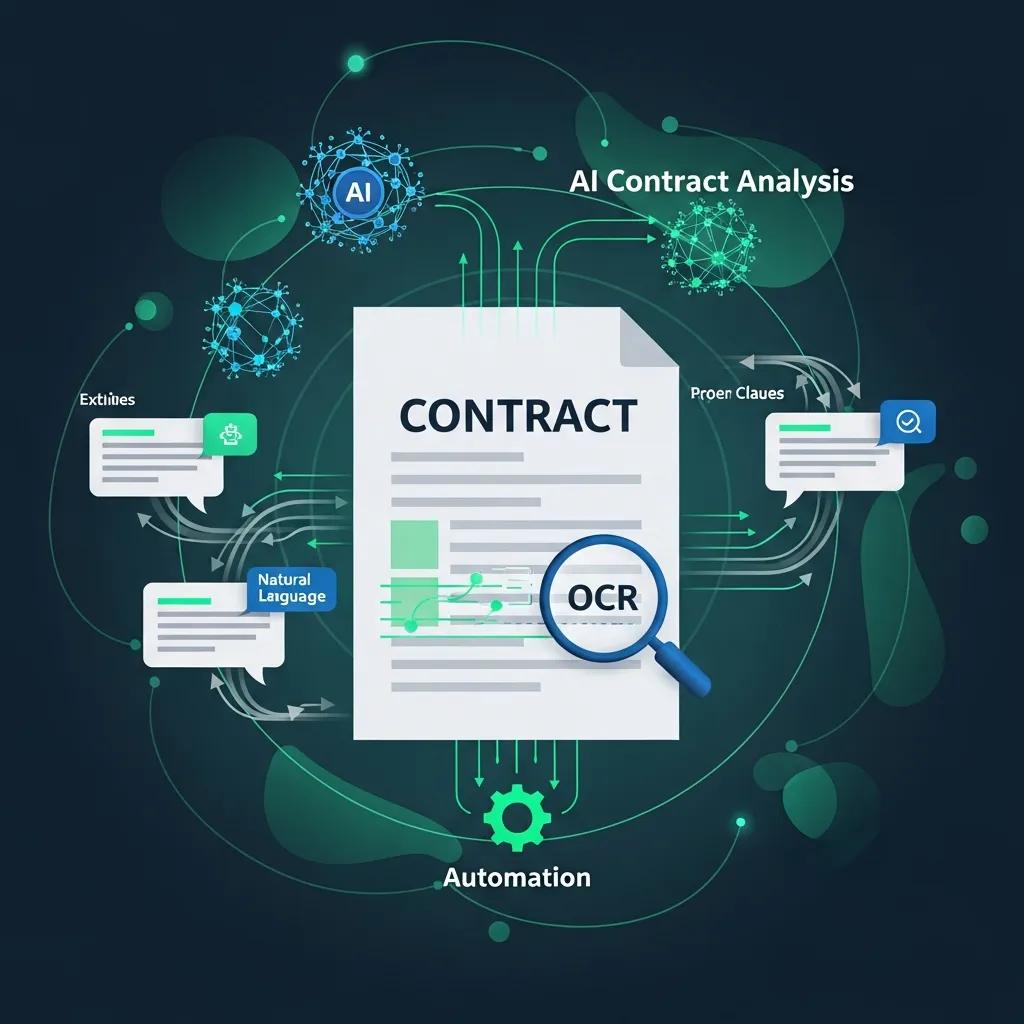
NLP enables machines to parse contract language, recognise clause boundaries and understand semantic intent, while ML models learn patterns over labelled examples to generalise across varied contract templates. Named Entity Recognition (NER) isolates entities such as party names, dates and amounts, and embedding models capture clause similarity to classify obligations or risks. OCR preprocessing converts scanned or image-based contracts into machine-readable text before models run, and confidence scoring paired with human-in-the-loop validation ensures accuracy improves over time. These components together allow an organisation to move from manual review to automated understanding, which then supports consistent downstream actions.
Before exploring extraction mechanics, it helps to see the core components mapped to their roles and example outputs so you can picture how each part contributes to a business outcome.
The table below summarises extraction components, their roles and a concrete example output to make the technical flow tangible.
How Does AI Extract Key Data Points from Legal Documents?
Extraction typically follows a stepwise pipeline: upload and ingestion, OCR where needed, pre-processing and normalization, entity and clause extraction, confidence scoring with human review, and structured export via connectors. During extraction, hybrid approaches combine rule-based templates for well-structured elements (for example, payment terms) with ML-driven models for ambiguous or variable language (for example, indemnity scope). Confidence scores flag low-certainty items for human-in-loop validation, which both corrects immediate errors and feeds back labelled examples to retrain models. This structured approach reduces time-to-insight and enables mapped outputs such as renewal alerts or liability summaries that feed back into operational workflows.
How Does AI Enhance Contract Management Efficiency and Speed?

AI accelerates contract management by automating routine extraction tasks, standardising clause classification, and enabling parallel processing of large contract volumes, which shortens review cycles and improves throughput. By turning buried terms into structured data, AI reduces the manual search burden and automates routing and approval workflows that traditionally required human triage. The net effect is measurable time savings, fewer bottlenecks between departments, and faster commercial decisions. Understanding these efficiency levers helps organisations prioritise which contract sets to process first and how to measure improvements.
Automated contract review delivers specific operational advantages that translate to faster cycle times, improved consistency and proactive alerts for critical dates and obligations.
Faster turnaround: Automated extraction reduces review time by eliminating manual data hunting.
Consistent rules application: Models apply the same clause logic across documents regardless of author.
Automated routing and alerts: Extracted fields trigger workflows and notifications without manual handoffs.
These advantages typically lead teams to shift from reactive catch-ups to proactive contract management, and the next section explains how fewer manual errors compound these gains.
What Are the Advantages of Automated Contract Review and Processing?
Automated review replaces repetitive line-by-line reading with rapid identification of key terms, enabling reviewers to focus on negotiation and risk decisions rather than data transcription. This improves throughput and ensures every contract receives a consistent baseline check against corporate policies, with alerts for unusual clauses or missing signatories. In practice, organisations report reduced bottlenecks in legal intake and faster time-to-execution as extraction drives downstream automated approvals. Automating review frees legal and commercial teams to prioritise high-value exceptions, which then shortens negotiation loops and improves commercial agility.
Efficiency gains naturally raise the question of accuracy; the next subsection explains how AI reduces manual errors and supports auditability.
How Does AI Reduce Manual Errors in Contract Data Extraction?
AI reduces manual errors through standardised parsing, confidence scoring and an auditable human-in-the-loop correction process that captures context for model retraining. Where manual transcription introduces inconsistent naming, misplaced dates or missed clauses, trained models apply consistent labels and preserve provenance metadata for each extracted value. Audit trails record who reviewed flagged items and what changes were made, enabling traceability and regulatory defensibility. As correction cycles feed back into model updates, extraction accuracy improves over time, translating to sustained reductions in error-related remediation costs and operational friction.
For teams ready to operationalise these efficiency benefits, many providers offer trial experiences that let you measure time saved and error reduction quickly; one such SaaS solution positions rapid transformation claims that can be evaluated in a straightforward trial.
For organisations testing a solution, Contrax automates contract review and speeds processing by extracting structured fields, generating dashboards and triggering alerts so teams can validate improvements during a trial period. Contrax positions a rapid time-to-value approach and invites prospective users to try the platform free, with no card required, to see how automated extraction shortens review cycles and reduces manual effort.
How Does AI Support Risk Mitigation and Regulatory Compliance in Contracts?
AI supports risk mitigation by detecting clause-level indicators of exposure, scoring risk, and tracking contractual obligations against compliance calendars to prevent missed liabilities. By classifying clauses such as indemnities, termination triggers and penalty provisions, models can flag non-standard language and quantify exposure for legal and finance stakeholders. Continuous monitoring allows organisations to detect changes in obligation status or regulatory language and to produce exportable compliance reports. These capabilities reduce surprise liabilities and provide auditable evidence for regulatory reviews.
Clause-level detection and obligation tracking are core features that help teams prioritise remediation and maintain regulatory posture. Clause-level detection
Clause risk detection: Models identify and tag risky language for review.
Obligation tracking: Extracted deadlines and deliverables feed compliance calendars.
Audit and reporting: Exportable reports enable regulator-ready documentation.
These features close the gap between document repositories and operational compliance, and the next subsection explains specific detection methods and remediation workflows.
How Can AI Identify Risky Clauses and Contractual Obligations?
AI identifies risky clauses through a combination of semantic pattern matching, supervised classifiers and risk-scoring algorithms that weight factors such as clause scope, monetary exposure and precedent frequency. Models tag obligations with metadata including due dates, responsible parties and escalation thresholds, then surface items that exceed risk tolerances or conflict with corporate policy. Once flagged, escalation workflows route the item for legal review or negotiation, and remediation actions are tracked until closure. This workflow ensures that risk detection converts into accountable operational steps rather than remaining a passive alert.
AI-Assisted Enterprise Contract Risk Identification and Management
Traditional manual contract review is plagued by inefficiency and excessive subjectivity, making it challenging to meet the high-frequency transaction demands of the digital economy. This study constructs a quantitative evaluation model for enterprise contract risks utilising artificial intelligence (AI) technology. It designs an indicator system comprising seven primary risk categories and twenty-eight secondary factors, covering aspects such as parties, clauses, and procedures. By integrating both rule-based and text-based pathways for risk probability assessment, the model achieves end-to-end management from data input to output. A risk classification standard is established, and a weighted algorithm is applied to generate the overall contract risk value, enabling precise quantitative ratings. Furthermore, an AI-based graded governance strategy is proposed according to risk levels—low-risk contracts are automatically approved to free up human resources. Enterprises should adopt t
AI-Assisted Enterprise Contract Risk Identification and Management Strategies, 2025
Identifying risk is necessary but not sufficient; the next subsection describes how continuous monitoring enforces regulatory compliance over time.
In What Ways Does AI Ensure Ongoing Regulatory Compliance?
AI enables ongoing compliance through automated checks against policy rules, change detection when regulatory language shifts, and scheduled audits that export standardised reports for regulators or internal auditors. Change-detection models highlight amended clauses between versions, prompting re-evaluation of obligations and recalculations of risk exposure. Periodic scans of contract portfolios produce compliance dashboards that show adherence rates and outstanding remediation tasks, making it easier for legal and compliance teams to prioritise effort. Combined, these features create a defensible, repeatable compliance process that links document evidence to operational controls.
Continuous compliance monitoring naturally feeds into strategic decision-making by turning contract data into analytical insights.
What Data-Driven Insights Does AI Provide for Strategic Contract Decisions?
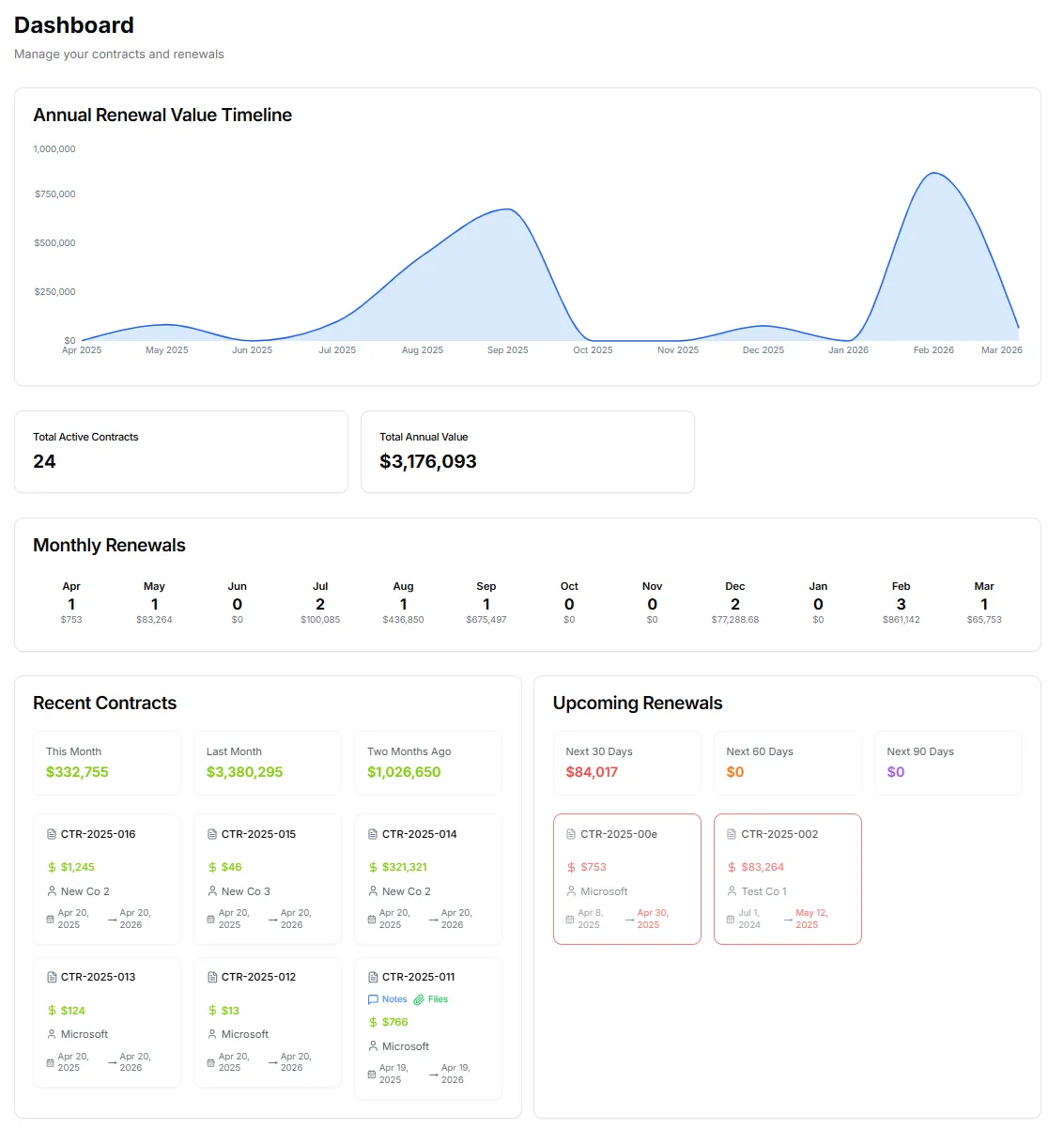
AI transforms extracted contract fields into dashboards and metrics that inform renewals, supplier performance, revenue recognition and negotiation strategies. By aggregating renewal dates, penalty clauses, pricing terms and SLAs, analytics highlight concentration risks, revenue leakage and opportunities for renegotiation. Predictive models extend this by forecasting churn risk or likely renegotiation windows, helping procurement and sales teams prioritise outreach. Access to these insights enables strategic timing and financial planning rather than last-minute firefighting.
Below is an EAV-style table mapping common contract data points to analytical metrics and typical business actions so readers can see how extraction maps to decisions.
This mapping shows how discrete extracted fields feed concrete business metrics and guide commercial activity.
How Does AI Extract and Analyse Contract Performance Metrics?
AI extracts structured metrics such as renewal timing, penalty triggers and SLA thresholds, then computes KPIs like on-time performance, compliance rate and value-at-risk to populate dashboards. These metrics can be segmented by counterparty, region or contract type to reveal patterns and outliers, for example suppliers with frequent SLA breaches or clients with high renewal volatility. Visual reports enable stakeholders to prioritise interventions and quantify the financial impact of contractual terms. The ability to export these metrics into BI tools closes the loop between document intelligence and enterprise reporting.
Turning metrics into forward-looking decisions requires predictive capability; the next subsection outlines how predictive analytics improves lifecycle management.
How Can Predictive Analytics Improve Contract Lifecycle Management?
Predictive analytics uses historical contract patterns and extracted features to forecast renewals, assess churn risk and prioritise review workloads, enabling teams to act before events occur. Models identify contracts likely to require renegotiation based on past amendment frequency or notice behaviour, and they surface high-value renewals that merit early attention. Prioritisation reduces wasted review effort and concentrates resources where commercial upside or risk mitigation is highest. Scenario planning driven by predictive outputs lets negotiators choose timing and concessions with clearer expectations of outcomes.
What Are the Cost Reduction and Scalability Benefits of AI Contract Data Extraction?
AI reduces direct and indirect costs by cutting manual labour hours, lowering remediation spend from missed obligations and accelerating revenue recognition through faster contract close and renewals. At scale, automated extraction handles surges in document volume without proportional headcount increases, and it preserves quality across geographies and languages when configured with multi-language models. These efficiencies compound: fewer errors mean fewer disputes, faster reviews mean quicker contract activation, and structured exports reduce downstream reconciliation tasks. Understanding these cost levers helps build ROI scenarios and justify investment.
The following list summarises primary cost and scalability benefits to use when building a business case.
Reduced labour costs: fewer FTE hours spent on manual review and data entry.
Lower error-related spend: decreased remediation of missed obligations and disputes.
Scalable throughput: batch and parallel processing without linear staffing increases.
Each item ties directly to measurable baseline improvements that can be tracked during a trial or pilot, as described in the EAV ROI scenarios below.
These scenarios illustrate how AI can materially affect operational KPIs and financial outcomes.
How Does AI Lower Contract Management Costs?
AI lowers costs by automating repetitive review and extraction tasks, reducing the time employees spend on low-value administration and decreasing the frequency of costly compliance breaches. By surfacing revenue-impacting terms earlier, AI prevents missed renewals and speeds billing, improving cash flow. Additionally, standardised extraction reduces the variability that drives legal disputes and remediation work. When these elements combine, organisations capture direct labour savings and indirect savings from improved commercial discipline.
Reducing costs through automation makes scalability easier; the next subsection explains how AI handles large contract volumes.
How Can AI Handle Large Volumes of Contracts Seamlessly?
Scalability relies on batch ingestion, parallelised extraction pipelines and continual model retraining to maintain quality as volumes grow and language patterns diversify. Systems partition workloads across parallel pipelines, apply pre-filtering to route simple documents for automated processing, and escalate complex or low-confidence items for human review. Multi-language models and format-agnostic preprocessing handle contracts from different jurisdictions and file types. Quality controls such as sampling and runtime validation ensure throughput increases do not degrade accuracy, allowing organisations to scale without linear increases in review headcount.
For organisations evaluating solutions, practical examples are useful: anonymised Contrax scenarios show how SaaS automation can scale processing while reducing cost and supporting demos or trials.
Contrax can be used as an example of a SaaS approach that presents anonymised scenarios where automated extraction reduces review hours and improves throughput; prospective users are encouraged to evaluate such claims through trial or demo sessions to measure cost and scalability gains in their own contract sets.
How Does the Contrax SaaS Solution Deliver AI Contract Data Extraction Benefits?
Contrax is a SaaS solution from SystemAssure ITSM Ltd. focused on customer contract management that implements AI extraction, dashboards and lifecycle automation to transform contract management in a rapid timeframe. Contrax aligns features such as automated clause extraction, renewal alerts and structured exports to CRM/ERP with a stated operational claim: transform your contract management in 90 days. The platform provides analytics for contract value distribution, obligation tracking and compliance monitoring, enabling teams to identify hidden costs and avoid common contract and sales mistakes. For organisations assessing solutions, Contrax offers a free trial with no card required so teams can validate extraction accuracy, time saved and dashboarded KPIs in their own environment.
Which Contrax Features Optimise Contract Management Efficiency?
Contrax combines automated extraction, visual dashboards and alerting to streamline contract operations and support measurable outcomes. Automated clause extraction converts free text into structured fields such as renewal_date, payment_terms and obligations; dashboards visualise concentration risks and upcoming renewals; alerts trigger workflows for exceptions and missed deadlines. Integrations export structured data to downstream systems, enabling seamless data flow without manual rekeying. These features are designed to deliver the time savings and accuracy improvements described earlier while supporting operationalisation across legal, procurement and sales teams.
A practical trial should focus on a small, high-value contract set to confirm extraction fidelity and dashboard insights before scaling to the full portfolio.
How Can Businesses Try Contrax for Free to Experience AI Benefits?
Contrax’s trial process is designed for low friction: sign up for the free trial, upload a sample set of contracts, run automated extraction and review the generated dashboards and alerts to measure impact. During the trial, teams should track specific KPIs such as reduction in review hours, number of extracted obligations, and time to capture renewal dates to quantify improvements. The promised 90-day transformation can be evaluated by focusing on initial use cases—renewals, high-value supplier contracts and compliance checks—and measuring baseline versus post-extraction metrics. Trying Contrax without a credit card removes barriers to testing, enabling a quick proof of concept before committing to wider deployment.
This practical trial approach helps teams validate claims and measure ROI within a predictable timeframe.
Conclusion
AI contract data extraction revolutionises efficiency by automating the handling of complex legal documents, minimising manual errors and expediting decision-making processes. By harnessing cutting-edge technologies such as NLP and ML, organisations can derive actionable insights that enhance compliance and mitigate risks effectively. Adopting these innovations not only streamlines contract management but also positions businesses for sustainable growth. Experience the transformative power of our Contrax solution by signing up for a free trial today.

